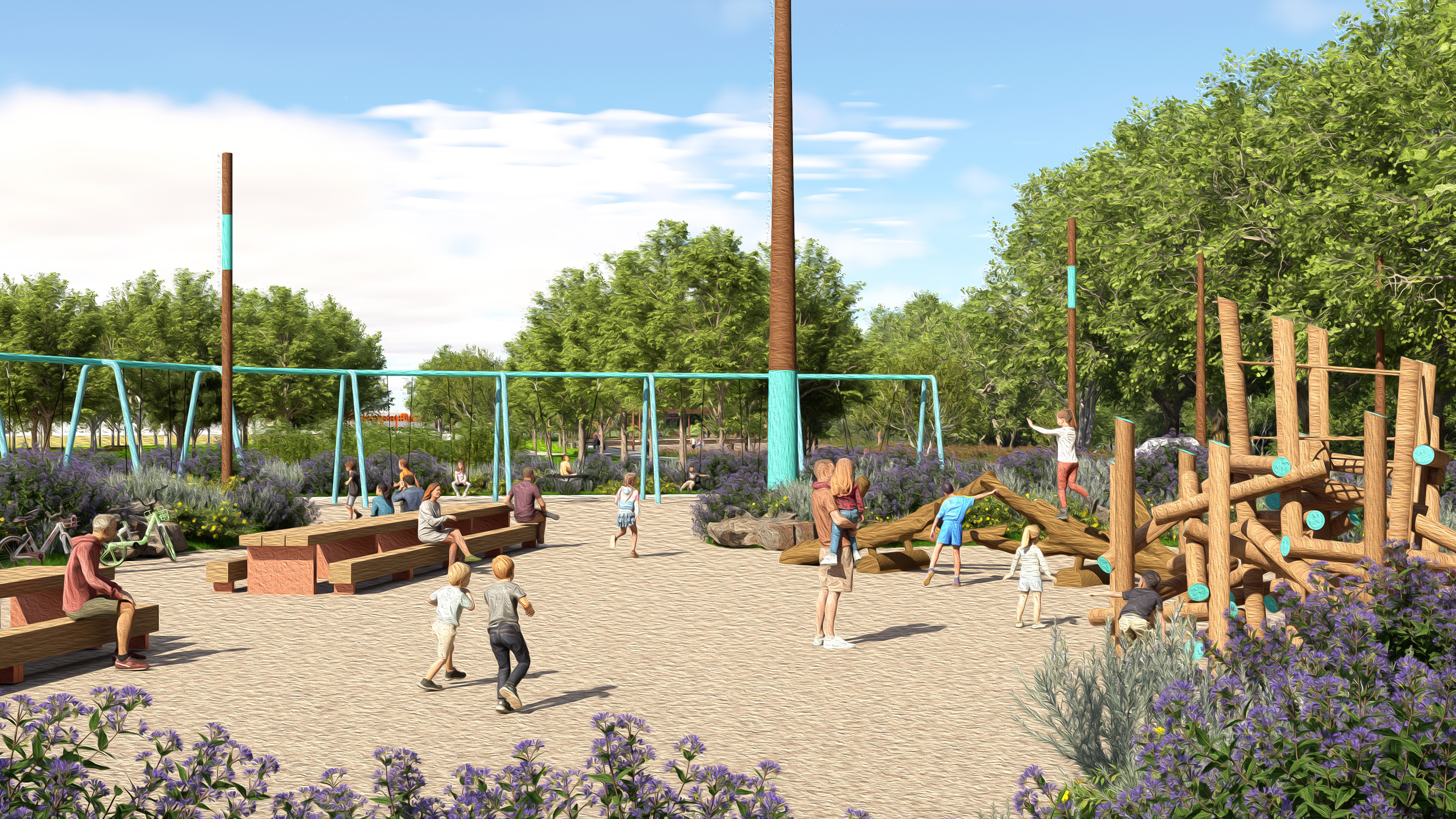
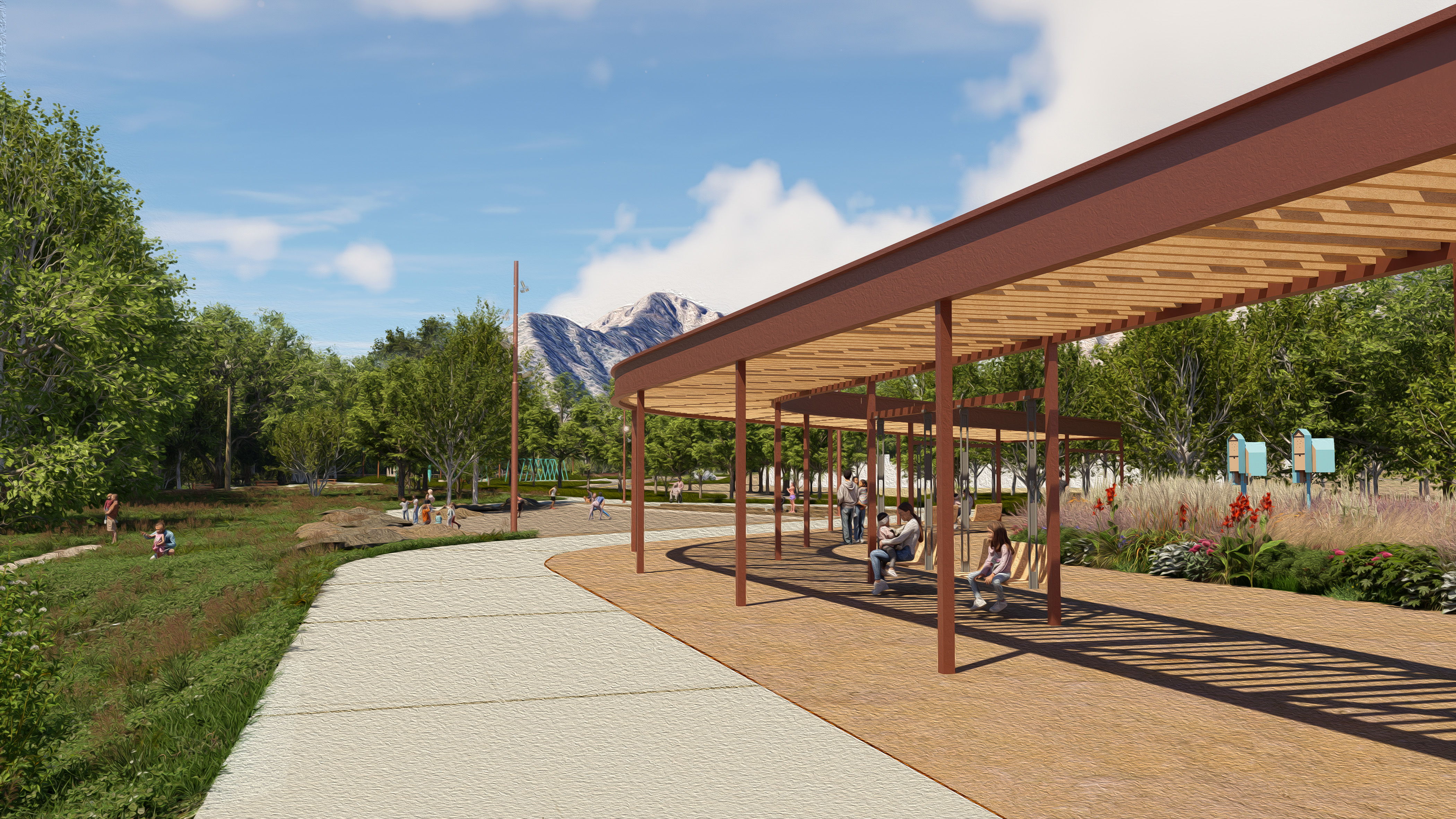
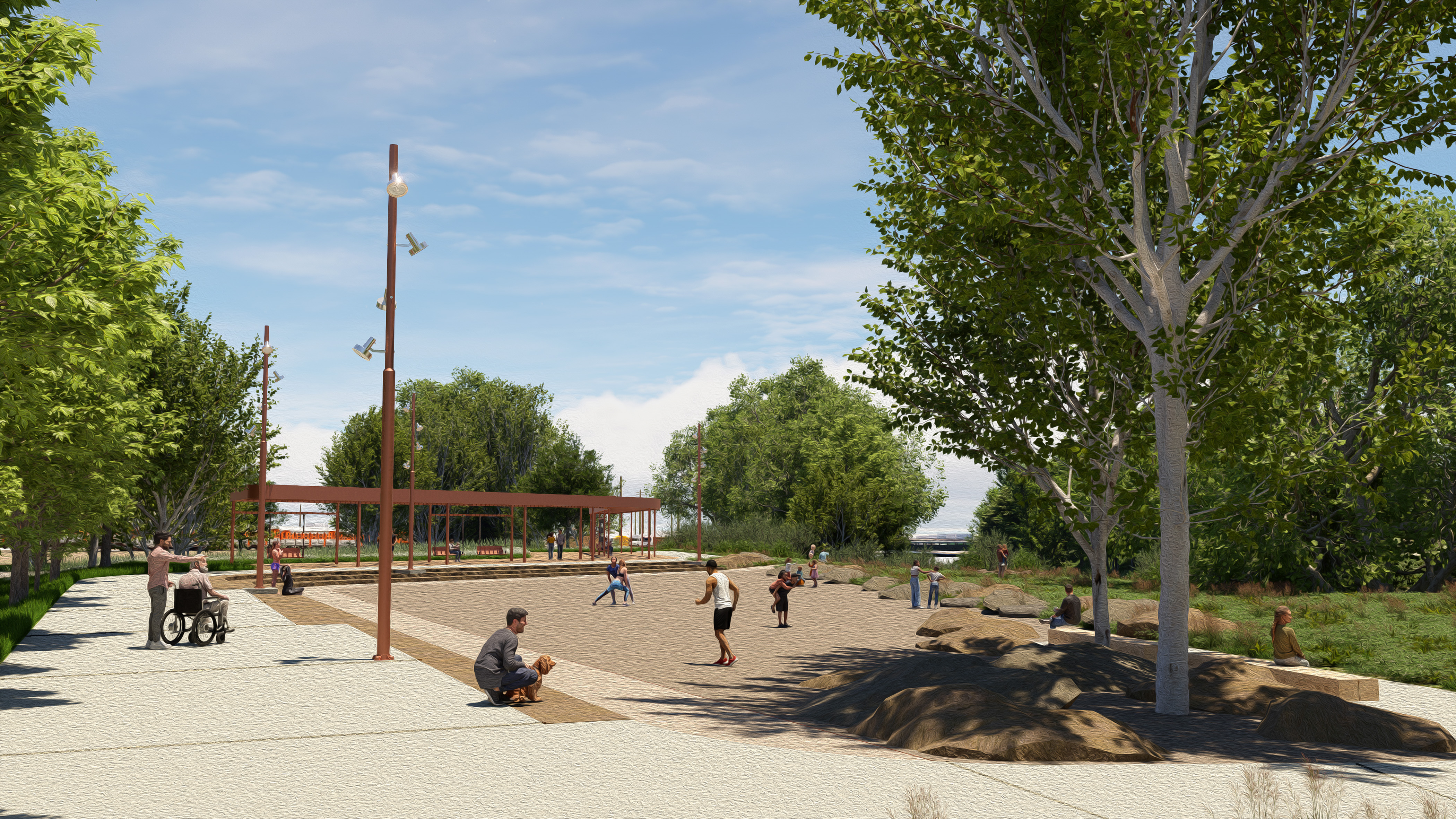
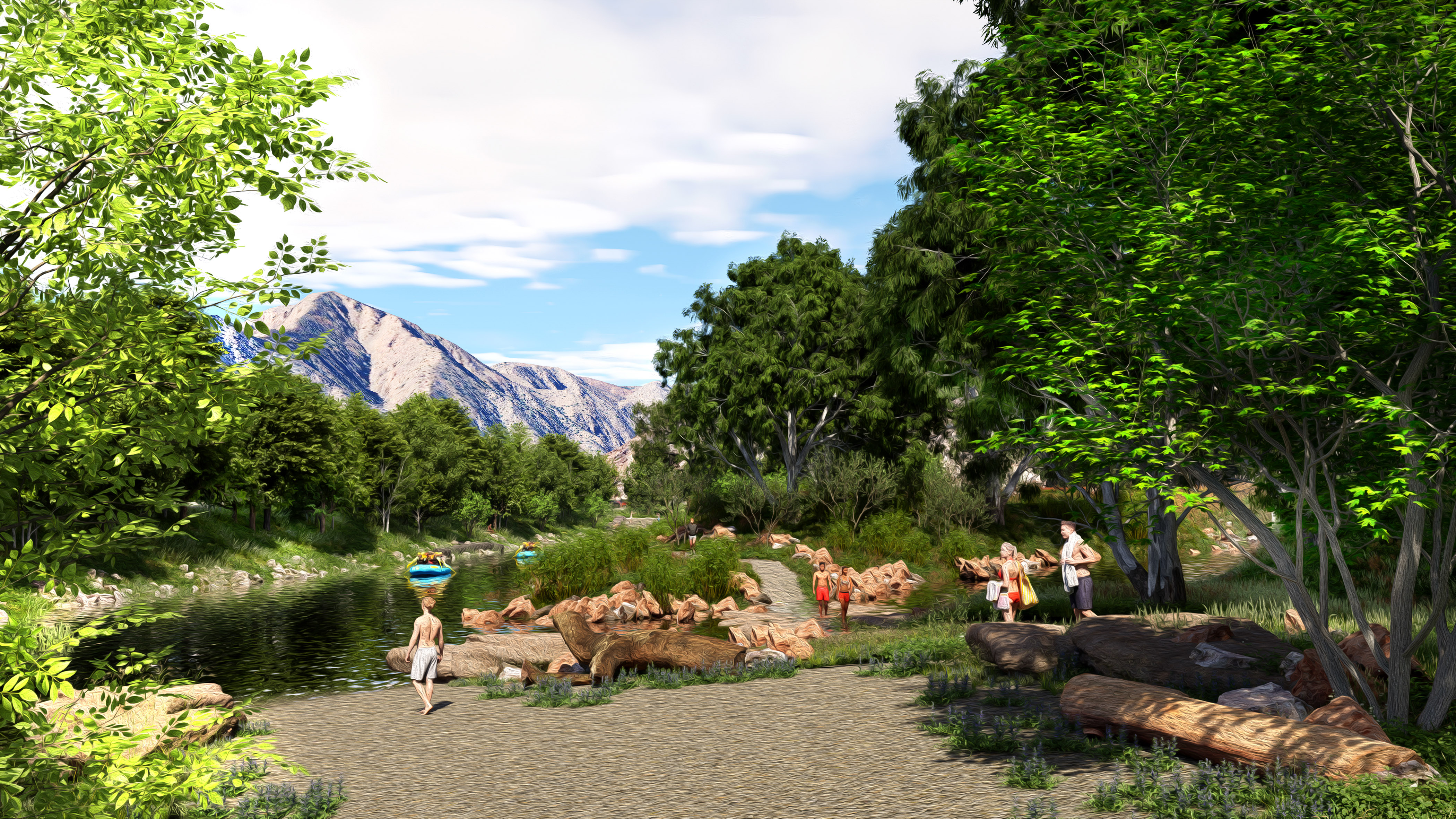
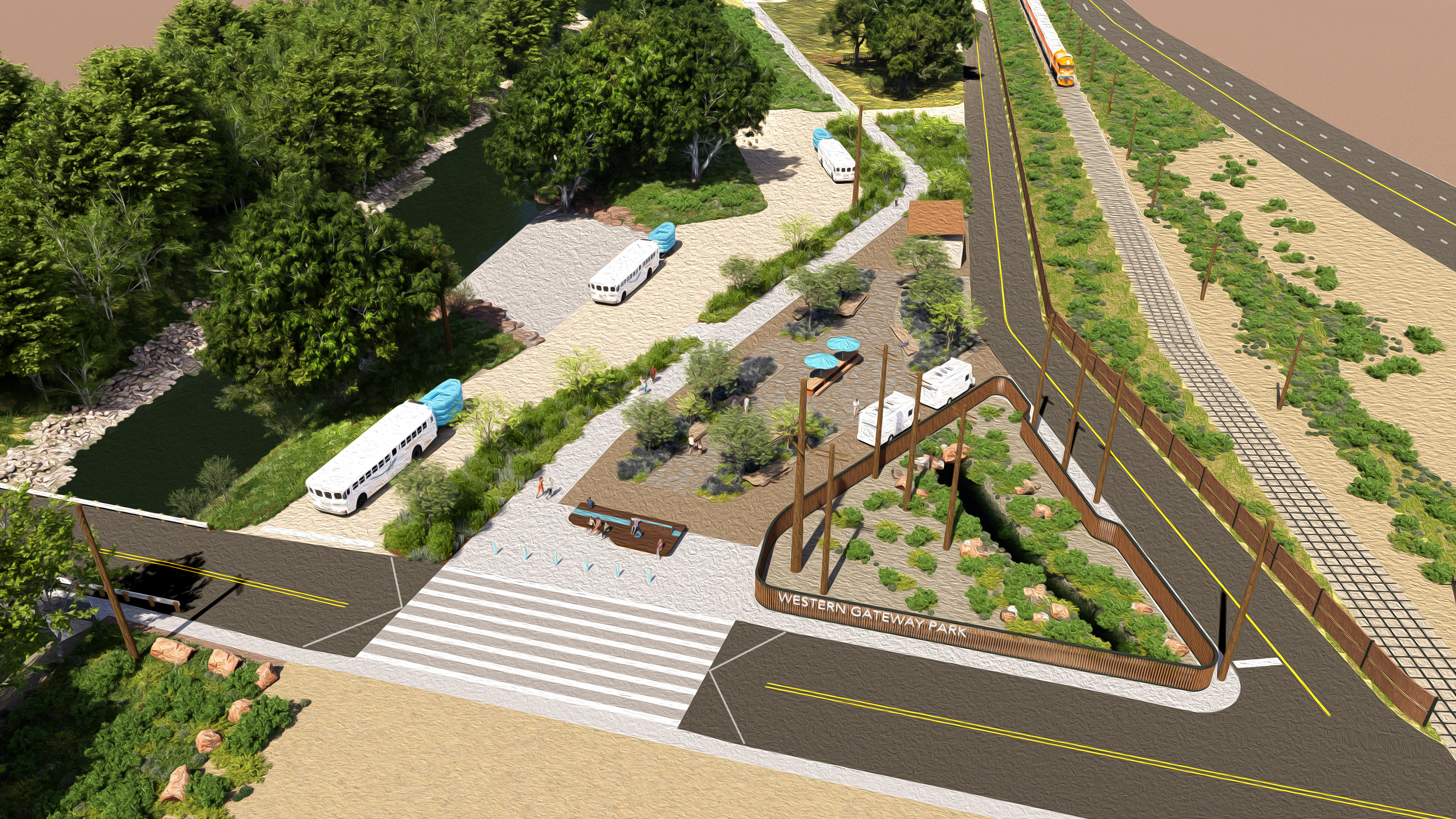
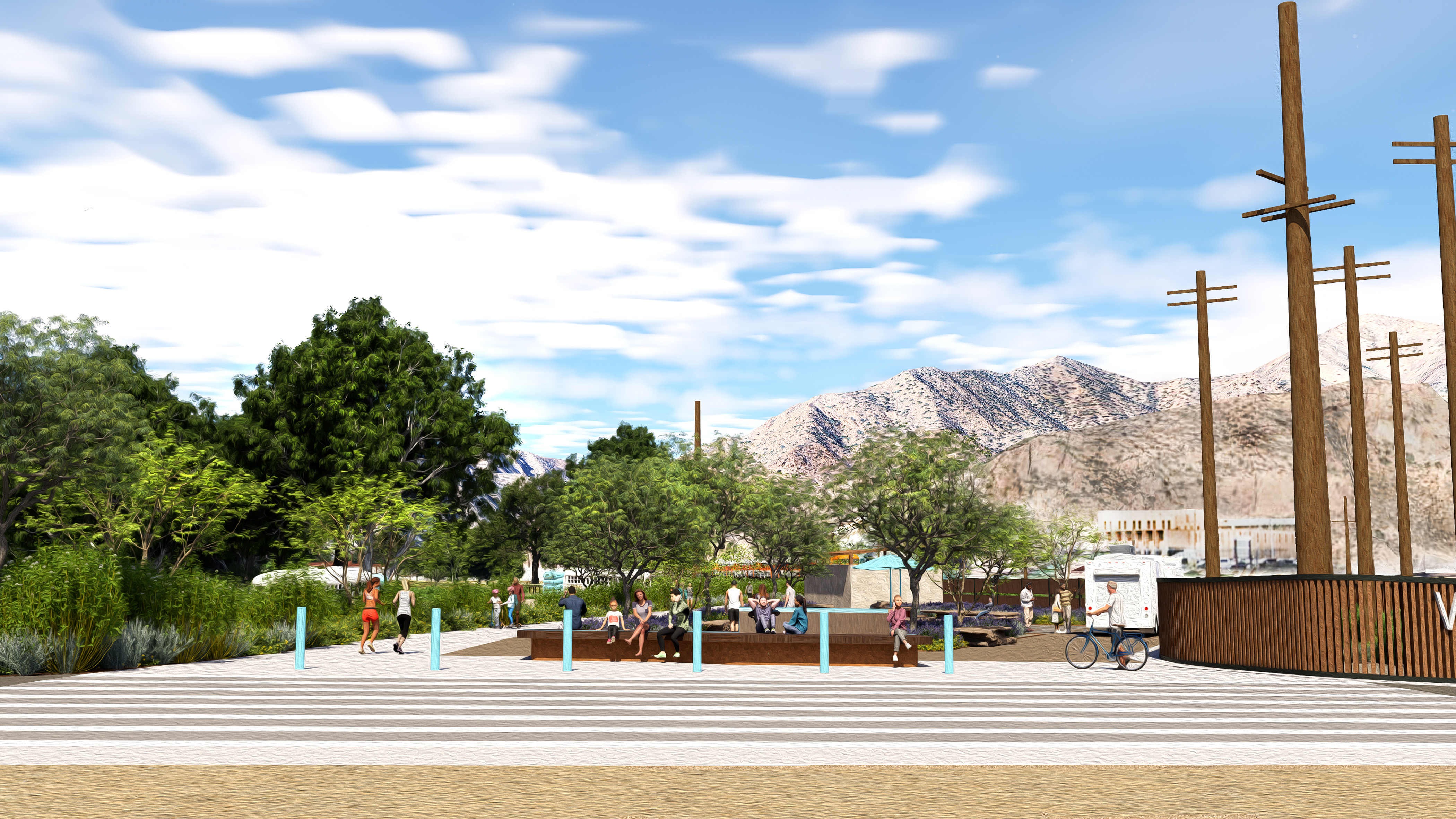
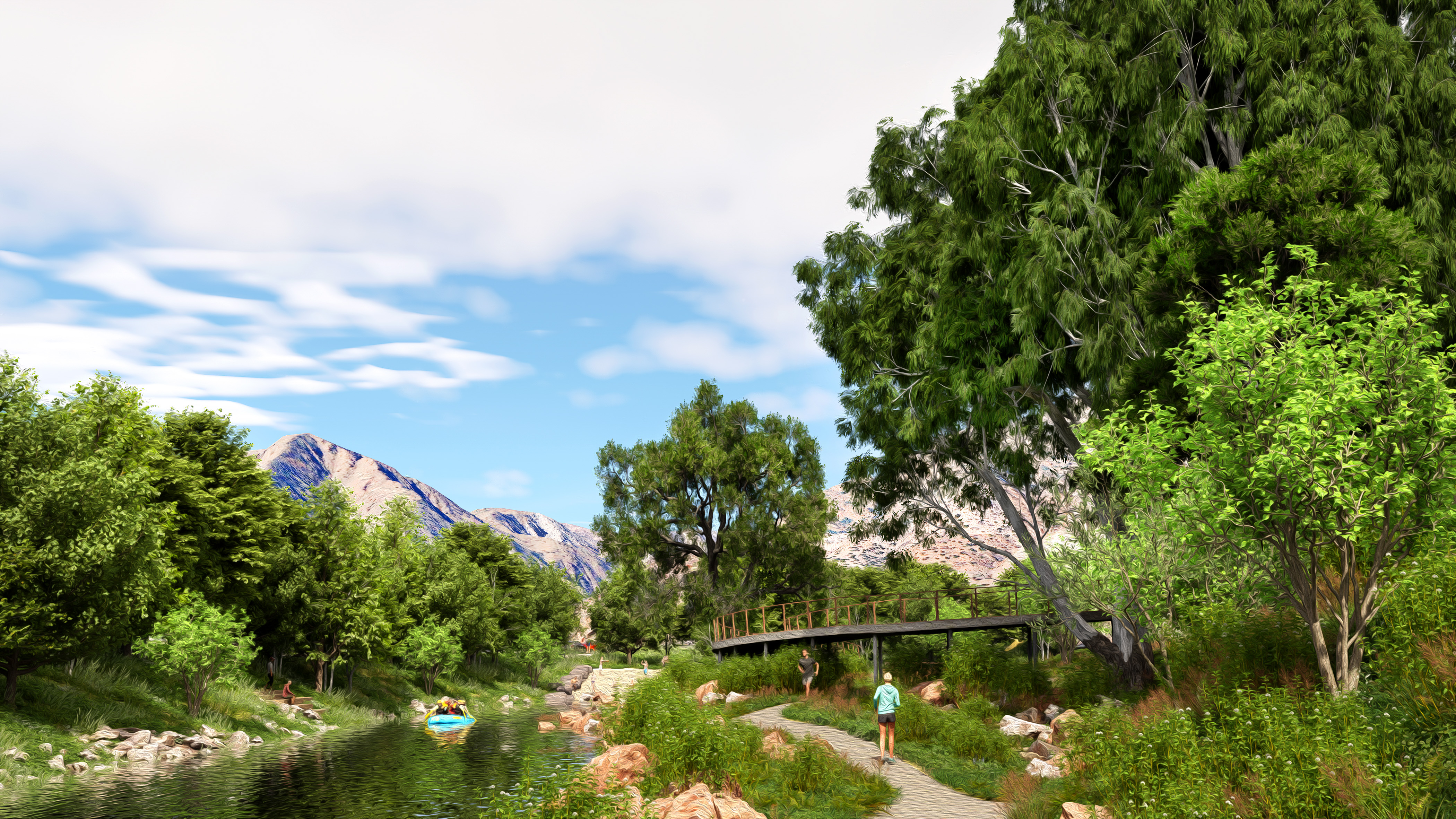
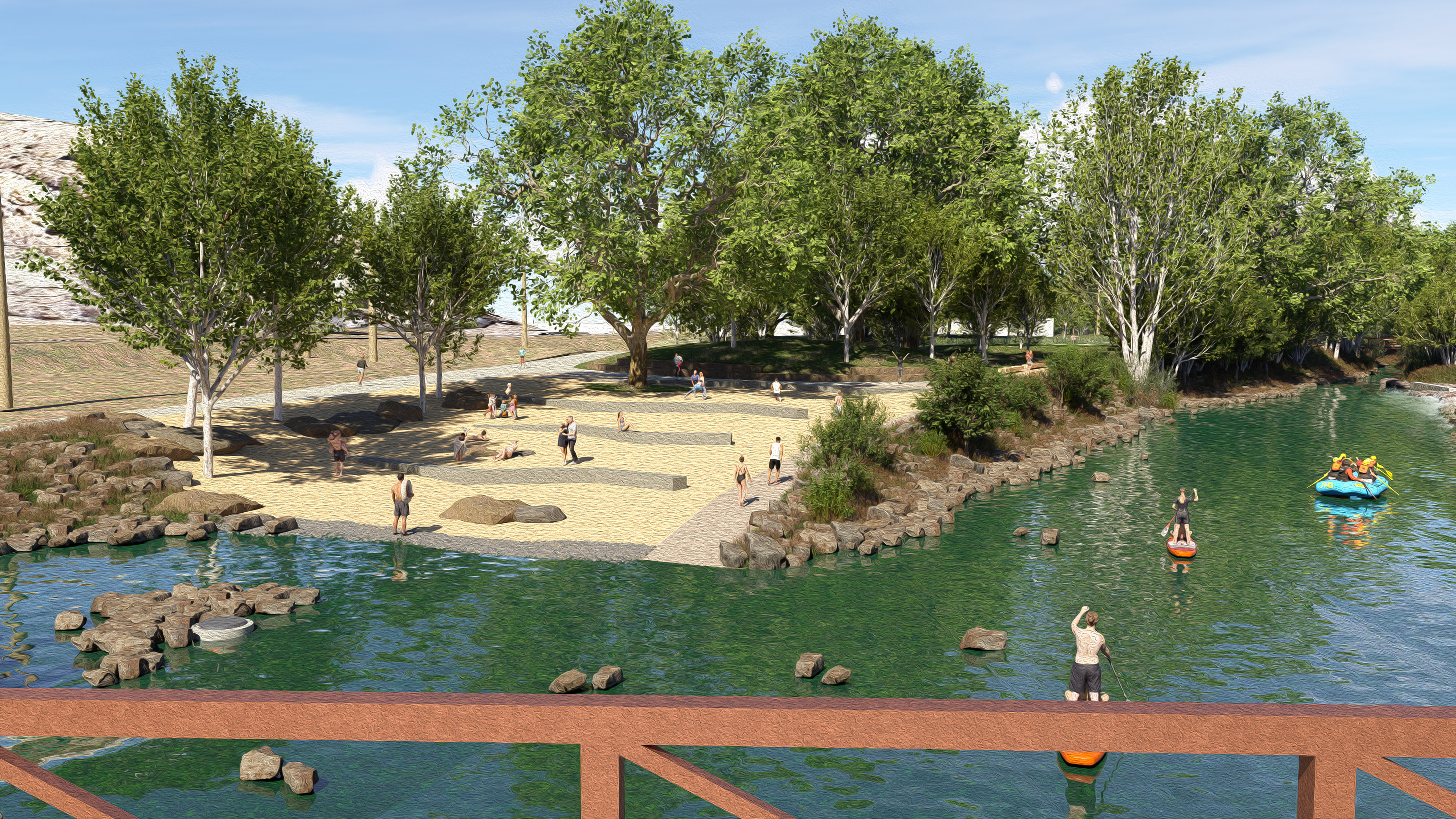
A framework for a new riverfront landscape, transforming a remediated industrial site into a vibrant public space for recreation, ecology, and community life along the Arkansas River.

Cañon City, CO
The City of Cañon City
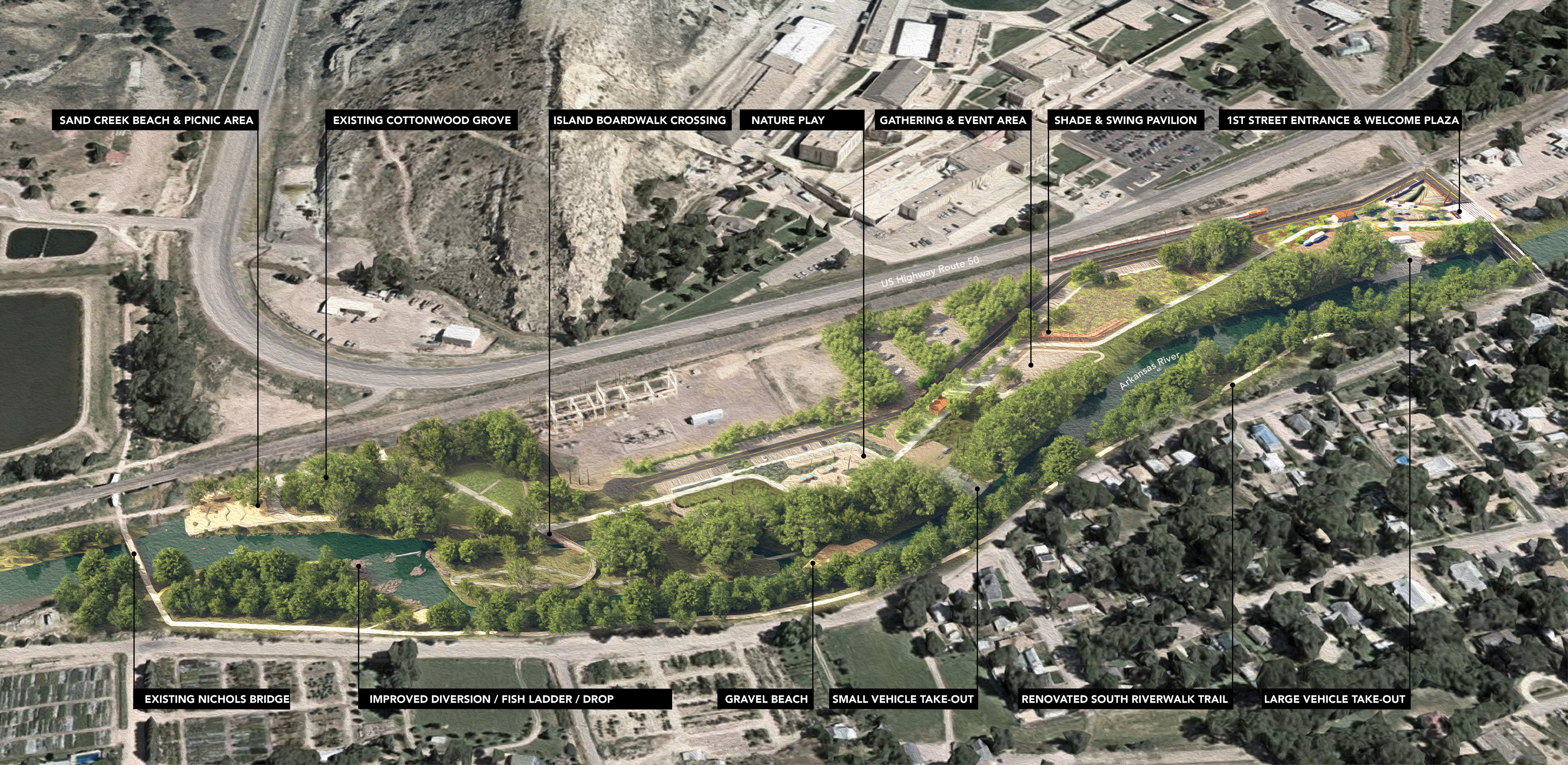
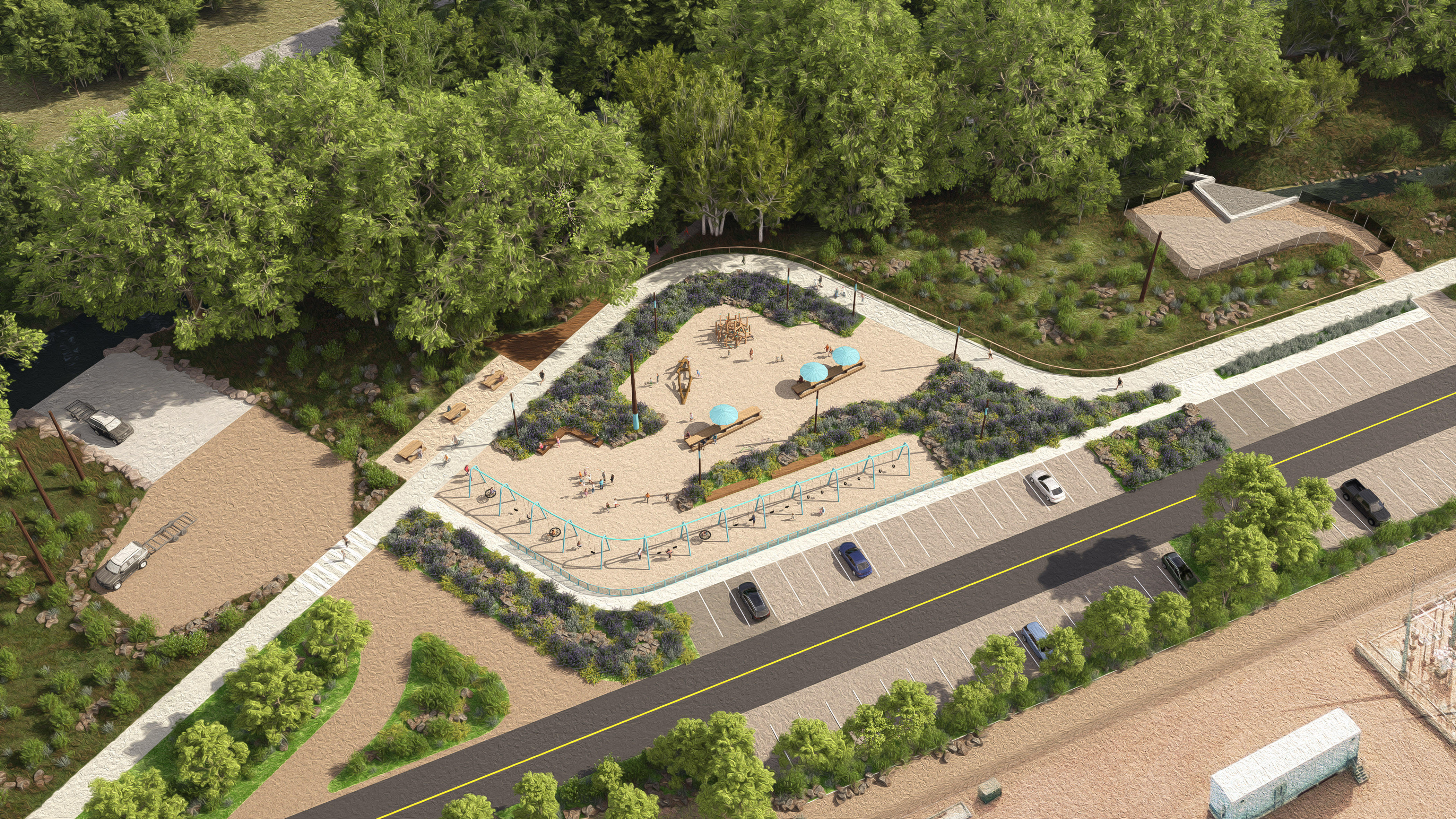
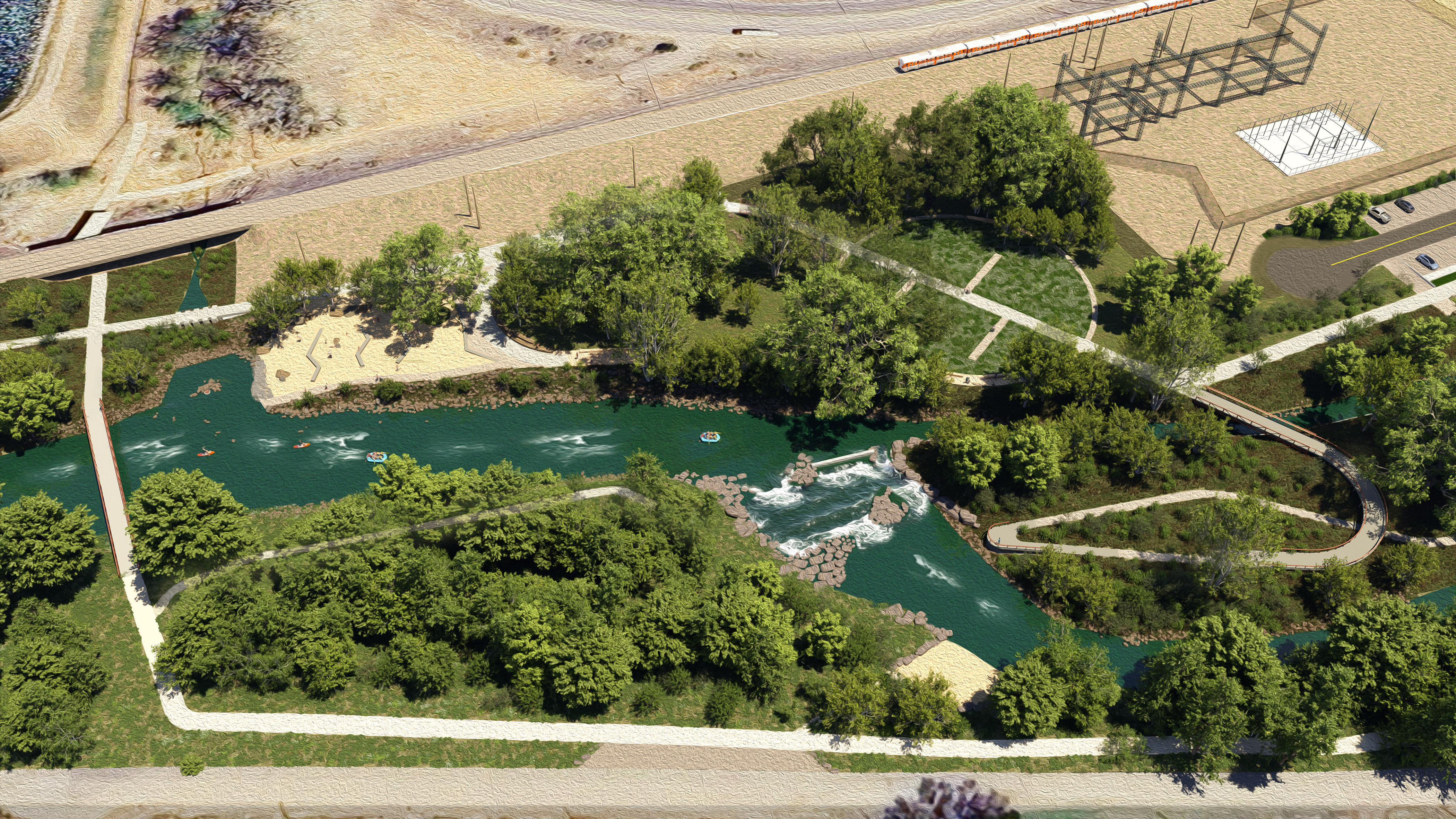
The Cañon City Riverfront Initiative establishes an actionable vision for transforming 23-acres of isolated industrial land along the Arkansas River into an accessible, community-oriented riverfront destination. The plan reimagines a remediated brownfield as a resilient public landscape, enhancing Cañon City’s connection with the Arkansas while strengthening opportunities for river-based recreation, ecological function, regional trail connectivity, and main street economic vitality.
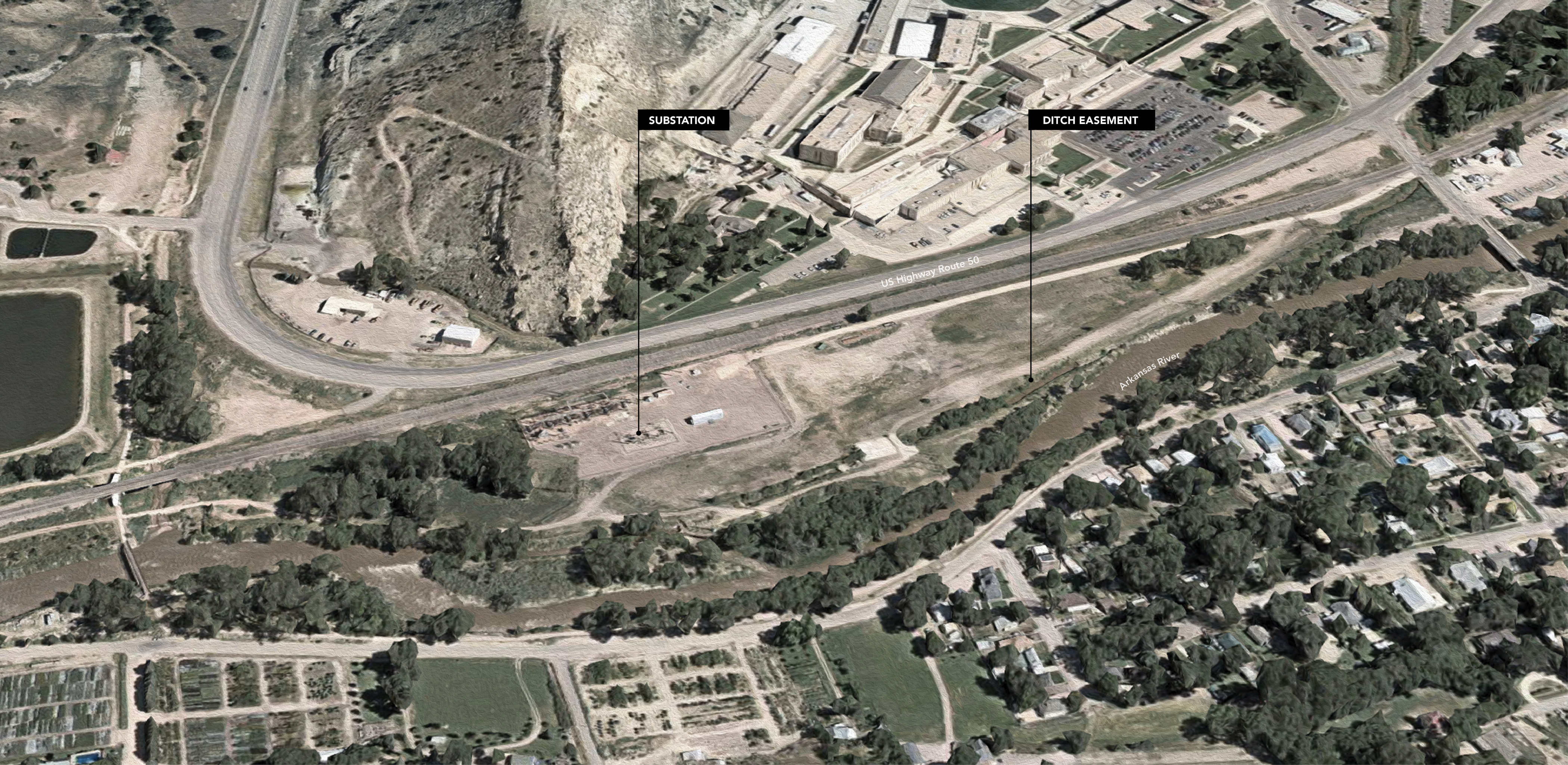
The plan works with the site’s existing systems—including the river and floodplain, Oil Creek Ditch, utility easements, transportation corridors, and mature cottonwood groves—to guide where and how improvements occur. Rather than concealing these conditions, the framework integrates infrastructure, ecology, and recreation into the identity of the future park.
Developed through extensive community engagement and interdisciplinary analysis, the plan provides a flexible roadmap for implementation over time. Strategic phases allow Cañon City to expand river access, restore habitat, strengthen trail connections, and introduce new public amenities as funding and partnerships become available, gradually transforming the former industrial site into a defining civic landscape along the Arkansas River.
Landscape Architecture
Planning Public
Engagement
LOCAL LANDSCAPE ARCHITECT: PerimeterGeography
HYDROLOGIC: Icon Engineering, Inc.
CIVIL: Baseline Engineering, Inc.
COST ESTIMATING: Dharam Consulting
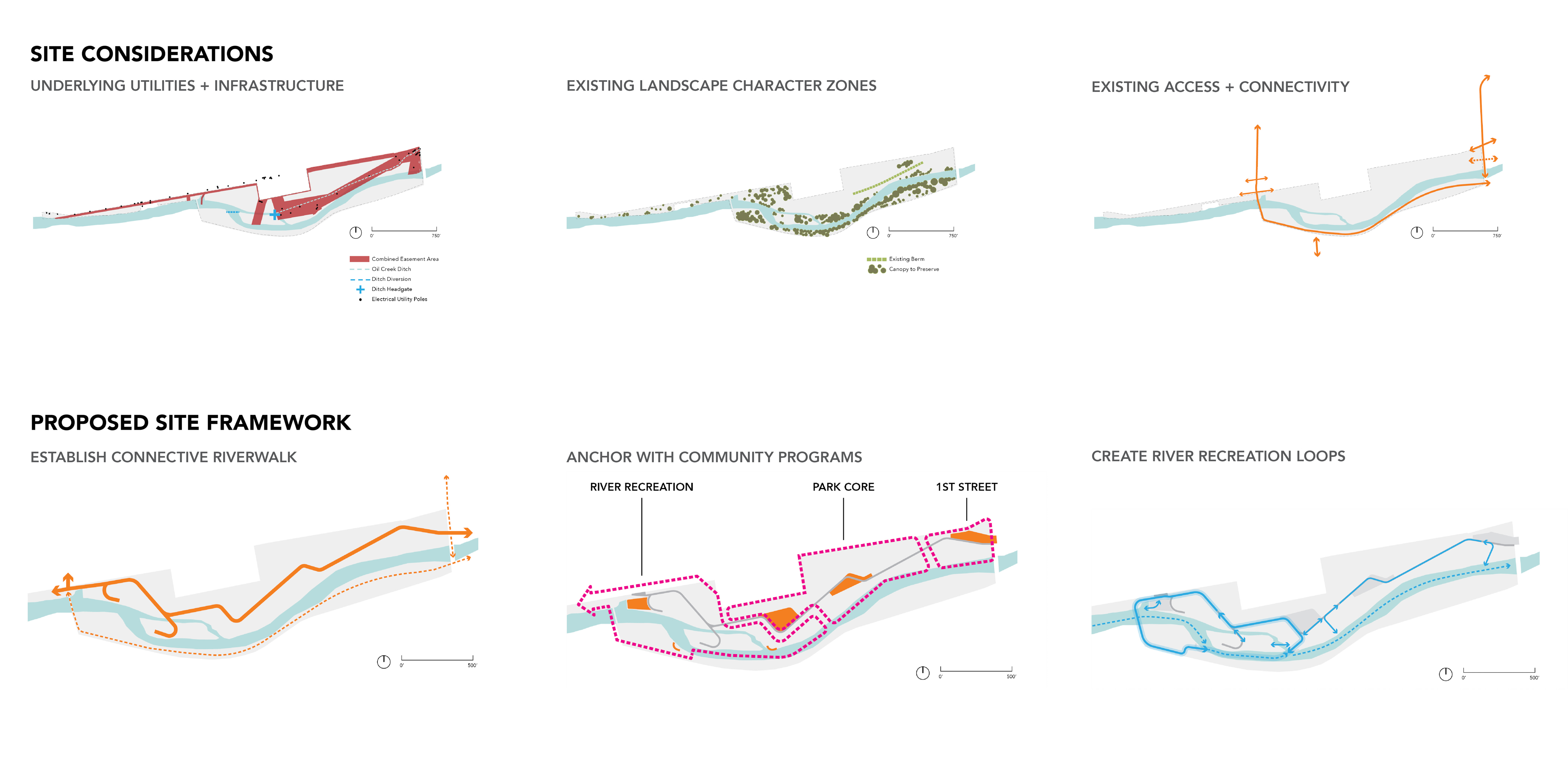
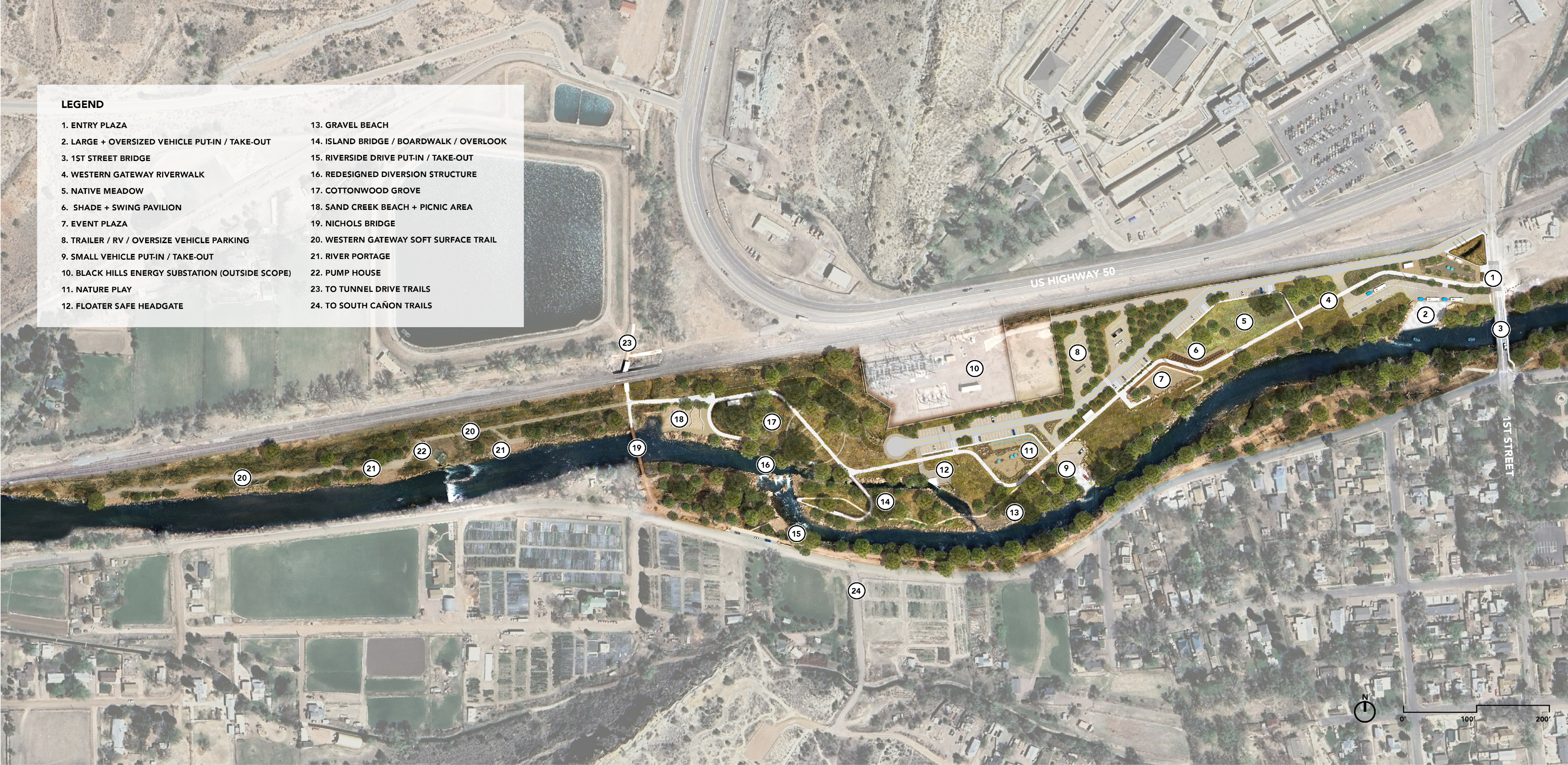
Site considerations—infrastructure, landscape character, and connectivity—guided decisions, balancing technical constraints with ecological restoration and access. The site is organized around complementary strategies that improve circulation, concentrate activity in key destinations, and expand recreational opportunities
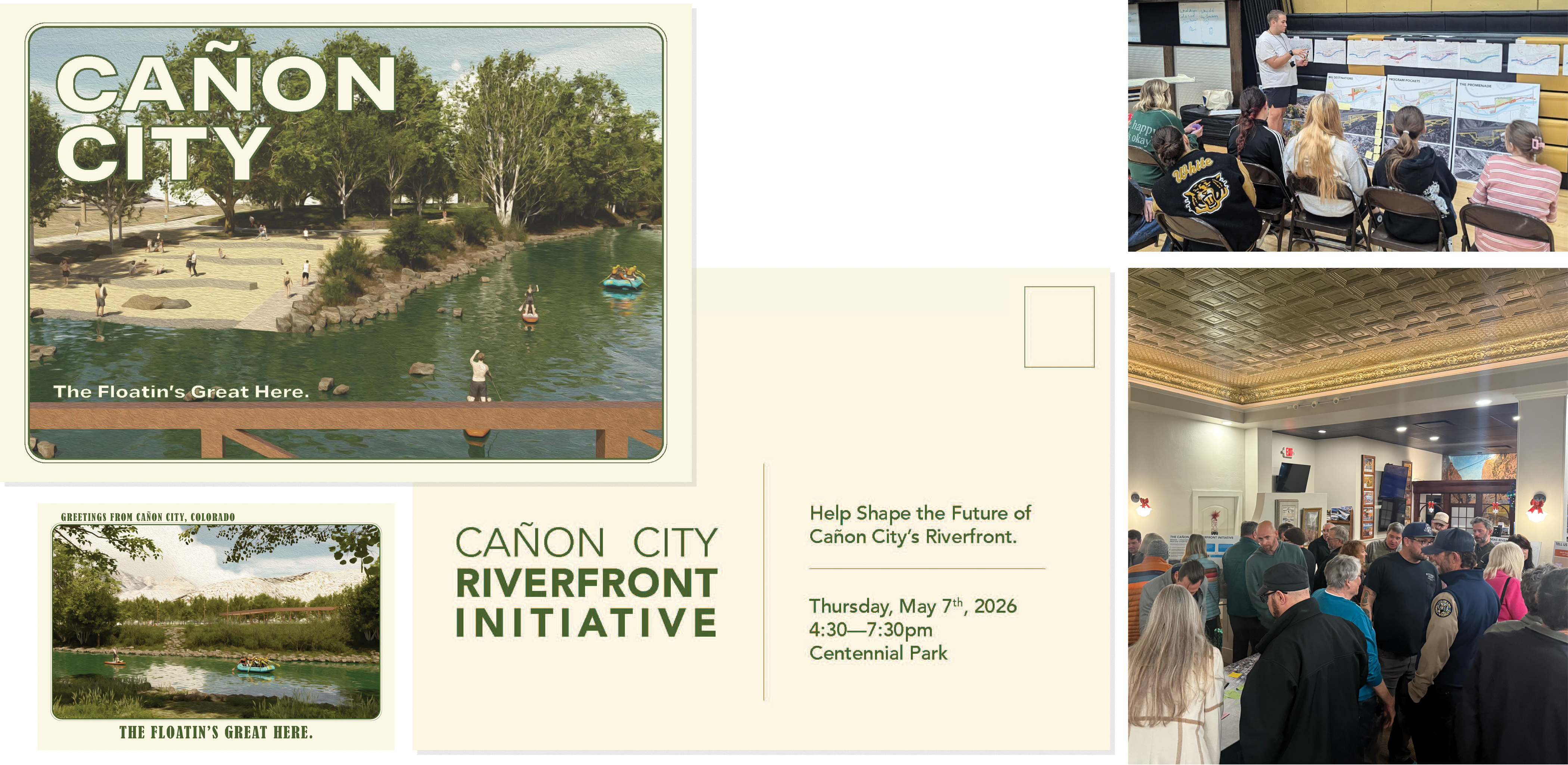
Public workshops, stakeholder discussions, and interactive feedback activities helped define community priorities, ensuring the framework reflects local values and long-term aspirations.